13 July 2026 · TalkForth Team
Why B2B buyers trust customer stories more than sales copy

Most B2B companies make broadly similar promises.
They save customers time. They make complicated work easier. They provide better support, deliver measurable results or offer a more reliable service than the alternatives.
These claims may all be true. The problem is that buyers have heard them before.
Sales copy tells prospective customers what a company wants them to believe. B2B customer stories show how those claims have played out in a real customer’s experience.
That distinction matters. A potential buyer no longer has to rely entirely on the supplier’s own description. They can see the situation another customer faced, why they made a decision and what happened afterwards.
B2B buyers are sceptical of claims without proof
B2B purchases often involve more risk than everyday consumer decisions.
The buyer may be spending a significant amount of company money, changing an important process or committing their team to a supplier for several months or years. They might also need to justify the decision to managers, directors, finance teams or other stakeholders.
Making the wrong choice can create more than financial consequences. It can waste time, disrupt operations and affect the buyer’s internal reputation.
That’s why confident claims alone are rarely enough.
Most suppliers sound similar
Visit a selection of competing B2B websites and you’ll often find the same types of promise:
- Expert support
- A seamless process
- Faster results
- Better efficiency
- A tailored service
- Measurable growth
- Industry-leading technology
There’s nothing inherently wrong with these statements. Sales copy needs to communicate the value of the offer.
However, the claims become difficult to distinguish when every supplier uses similar language. Without real customer proof, prospective buyers may struggle to decide which company can genuinely deliver.
Buyers need confidence before they speak to sales
Many B2B buyers complete a large amount of research before booking a call or replying to an outreach message.
They’re looking at service pages, pricing information, company profiles, reviews and examples of previous work. They’re trying to work out whether a supplier understands their situation before giving up time for a sales conversation.
B2B customer stories help provide that reassurance. A relevant story can show that the supplier has worked with a similar company, solved a recognisable problem and delivered an outcome the buyer values.
Why customer stories feel more believable
Customer stories are persuasive because the supplier is no longer the only person making the claim.
Instead of simply saying, “Our platform saves teams time,” the company can show how a particular customer was working before, what was causing delays and how their process changed.
That added detail turns a promise into sales proof.
They come from someone outside your company
Buyers expect companies to present themselves positively. Every business wants to describe its service as useful, reliable and worth the investment.
A customer has a different position in the story. They’re describing what they experienced rather than trying to sell the service directly.
This doesn’t mean buyers assume every case study is completely impartial. They understand that the company has selected and published the story. However, a named customer, natural quotes and specific experiences still carry more weight than unsupported sales claims.
They show context, not just outcomes
An impressive result can attract attention, but B2B buyers usually want to understand what sits behind it.
They may want to know:
- What problem was the customer facing?
- Why was the issue important?
- What had they already tried?
- Why did they choose this supplier?
- What was the implementation or working process like?
- What changed after the purchase?
Good B2B customer stories answer these questions. They show the steps between the original problem and the final result, making the outcome more credible.
They use real customer language
Marketing teams often describe problems differently from the customers experiencing them.
A company might talk about “operational inefficiencies”, while a customer says their team was spending three hours every Friday fixing spreadsheets. The second description is more specific, easier to picture and often closer to the language used by future buyers.
Thoughtful customer interviews capture these details. Natural quotes help readers recognise familiar frustrations without making the story sound like another piece of polished sales copy.
Customer stories reduce risk in the buying process
B2B buyers are rarely looking for absolute certainty. They know that every company, project and implementation is different.
What they do want is enough evidence to make the decision feel reasonable.
B2B customer proof reduces uncertainty by showing that another organisation has faced a similar decision and achieved a worthwhile result.
They help buyers recognise themselves
A persuasive customer story gives the reader a reason to think, “That sounds like us.”
The connection might come from the customer’s industry or company size. It could also come from a shared problem, use case, buying pressure or stage of growth.
For example, a 30-person SaaS business might relate strongly to a story about another small marketing team struggling to produce enough content. A logistics company may care more about a story involving operational delays, customer visibility or manual administration.
The closer the situation feels, the more useful the story becomes.
They make outcomes easier to believe
“Save time” is a generic benefit.
A customer explaining that their reporting process fell from two days to two hours is evidence.
Even when exact numbers aren’t available, context strengthens the result. A customer might describe fewer handover problems, more confidence in their data or a smoother process for their team.
The outcome becomes more believable because the reader understands what changed and why it mattered.
They give buyers something to share internally
Many B2B buying decisions involve several people.
The person researching suppliers might need to present a recommendation to a manager, answer questions from procurement or convince the wider team to support a change.
Customer case studies give that buyer useful evidence to share. A relevant story can help them explain why the supplier appears credible, how the service works and what another company gained from the decision.
Customer stories vs sales copy: what each one does best
Sales copy and customer evidence serve different purposes. One shouldn’t replace the other.
| Content type | What it does well | Where it can fall short |
|---|---|---|
| Sales copy | Explains the offer, positioning, features and benefits clearly | Can sound similar to competitors when claims aren’t supported |
| Customer testimonial | Adds quick social proof and a recognisable customer voice | Often lacks context about the problem, process or outcome |
| Customer story | Shows a real experience in a relatable and engaging format | Can become vague when the story isn’t captured through a detailed interview |
| Customer case study | Provides structured evidence covering the challenge, decision, process and results | Requires more customer participation and preparation |
Sales copy tells the buyer what the company offers. Customer stories show what using that offer looks like in practice.
Both types of customer proof become stronger when they work together. The service page establishes the value proposition, while the customer story gives the buyer a reason to trust it.
What makes a B2B customer story persuasive?
Not every story automatically becomes effective customer proof.
The strongest B2B customer stories are relevant, specific and easy to believe. They contain enough detail to help the reader understand the customer’s situation without turning into an overly long company profile.
A clear customer situation
The reader needs to know who the customer is and why their situation matters.
Useful context might include their industry, team size, growth stage, customer type or operating model. The aim isn’t to include every detail about the business. It’s to explain the circumstances that make the story relevant.
A specific problem
Weak customer stories often describe a company that simply “needed a better solution”.
A stronger story explains what wasn’t working. Perhaps the team was losing time to manual tasks, struggling to report on performance or finding that their existing supplier couldn’t support growth.
Specific problems create recognition. They also make the eventual result easier to assess.
A believable decision process
Buyers are often interested in why the customer selected one supplier over the available alternatives.
The reason might be specialist expertise, responsiveness, technical fit, speed, trust or a clearer implementation process.
Including this decision stage helps readers understand where the supplier was genuinely different, rather than relying on a list of self-written differentiators.
A real outcome
Hard numbers can strengthen customer case studies, but they aren’t the only valuable outcomes.
Some improvements are easier to express through operational or human changes, such as:
- Less time spent on administration
- Faster customer responses
- Fewer errors
- Smoother internal handovers
- More confidence in decision-making
- Reduced pressure on a small team
The result needs to be clear and meaningful, even when it can’t be reduced to a percentage.
Natural quotes
Customer quotes should sound like something the customer would actually say.
They can be cleaned up for clarity and readability, but rewriting them into heavily polished marketing language removes much of their credibility.
A slightly conversational quote with a specific observation will usually feel more believable than a broad statement about “exceptional service and transformational results”.
Why case studies are often the strongest form of customer story
The distinction between case studies and testimonials matters here. Customer testimonials can provide valuable reassurance, particularly beside a relevant service or product claim, but a short quote rarely explains the full story.
However, a short quote rarely explains the full story.
A detailed case study can show:
- The customer’s starting point
- The problem they needed to solve
- Why they chose the company
- What the process was like
- What changed afterwards
- How the customer now views the experience
This makes customer case studies one of the strongest forms of B2B customer proof. They combine narrative, detail, outcome evidence and the customer’s own voice.
If you already have happy customers but only a few scattered quotes, TalkForth can help turn those experiences into structured customer stories and case studies.
Our B2B customer story writing service includes story planning, customer interviews and the creation of credible assets that can support your website and sales process.
How to use customer stories alongside your sales copy
Customer evidence shouldn’t be placed in one isolated section of your website and forgotten.
The strongest approach is to connect each customer story to the claims, services and buying situations it supports.
On your homepage
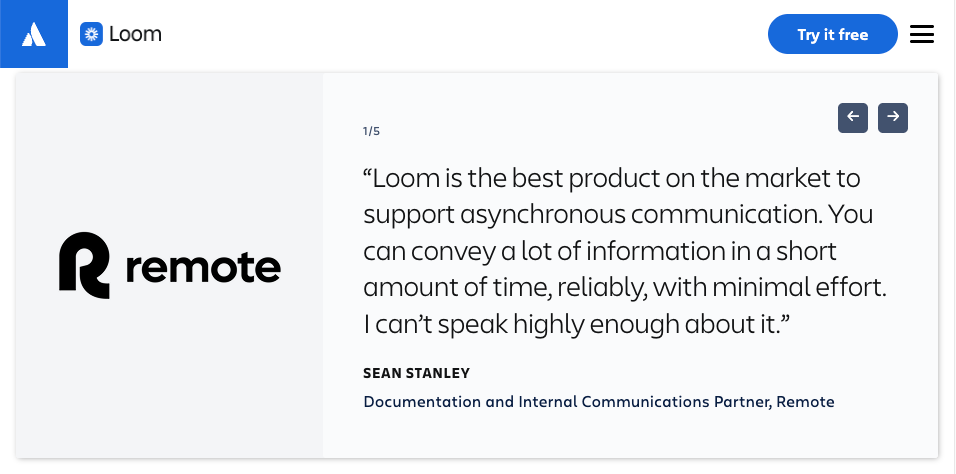
Short proof blocks, selected quotes and links to full stories can support the main promises made on your homepage.
For example, a claim about saving customers time could be followed by a short customer result showing how much time was saved and what changed.
On service or product pages
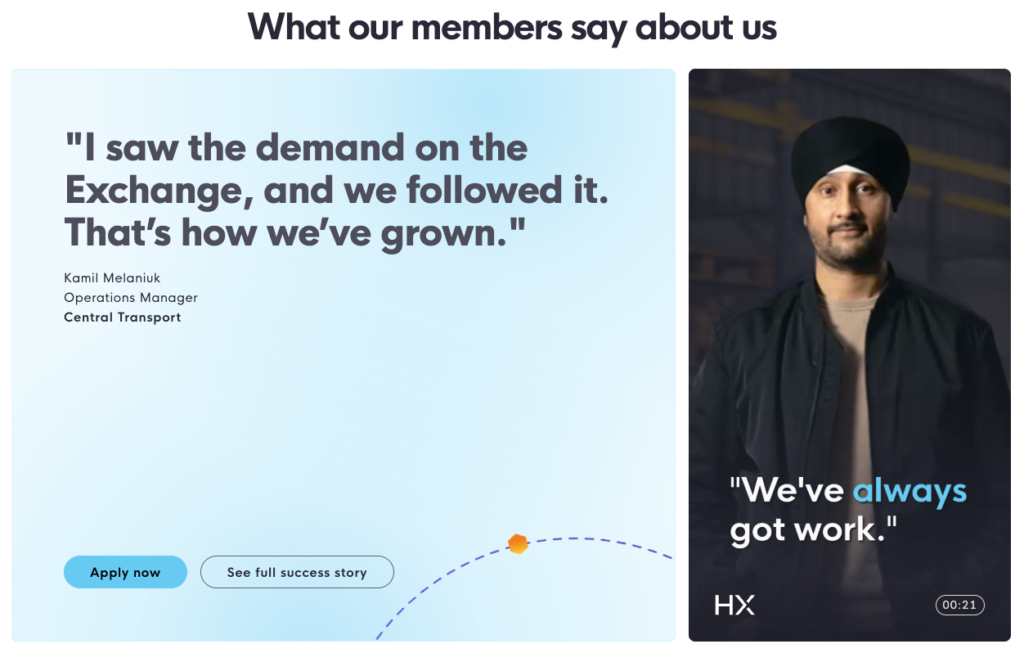
Add relevant customer evidence near the claims it supports.
A company offering several services may need different stories for different pages. The most persuasive example is usually the one that closely matches the service, problem or buyer currently being discussed.
In sales follow-up
Sales teams can send relevant B2B customer stories after calls.
Rather than sending every prospect the same generic company deck, they can select a story based on the prospect’s industry, challenge or concerns.
This turns the story into practical sales proof rather than passive website content.
In proposals and pitch decks
Proposals often include promises about delivery, service quality and expected outcomes.
Customer stories make these promises feel less abstract. A short example or quote can demonstrate that the company has successfully completed similar work before.
On LinkedIn and email
One customer story can produce several smaller content assets.
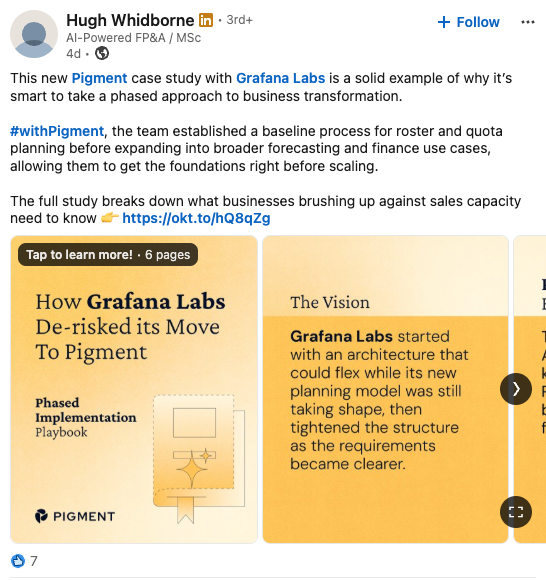
Quotes, lessons, results and interview insights can be adapted into LinkedIn posts, email content, sales messages and website snippets. The full story remains the core asset, while shorter versions help distribute the customer evidence across multiple channels.
How to start collecting better customer stories
Companies often have more potential customer proof than they realise.
Positive emails, reviews, call notes, survey responses and informal comments can all reveal useful story opportunities.
A simple process can help:
- Gather your existing testimonials, reviews and customer praise.
- Identify customers with a clear problem, decision and outcome.
- Ask the sales team which examples would help in real conversations.
- Choose one suitable customer to interview first.
- Ask questions that reveal context and detail, not just compliments.
- Turn the interview into a story that supports the website and sales process.
The interview is particularly important. Customers don’t always know which details will be useful to future buyers, so a list of generic written questions can produce short or vague answers.
Thoughtful follow-up questions help uncover the strongest parts of the experience.
TalkForth supports this process by helping companies choose an angle, interviewing the customer and turning the conversation into clear, credible B2B customer stories.
Common mistakes to avoid
Even a positive customer experience can become an unconvincing story when the content is approached in the wrong way.
Making the company the hero
The customer should remain at the centre of the story.
The supplier’s role is important, but the story will usually be more relatable when it focuses on the customer’s situation, decision and progress.
Publishing vague praise with no context
“Great service” is a positive testimonial, but it doesn’t tell future buyers why the service was useful or whether it fits their situation.
Ask what specifically made the service good, what was happening before and what changed as a result.
Over-polishing the customer’s voice
Quotes should be clear, but they shouldn’t sound as though they were written by the marketing team.
Removing every conversational phrase and replacing ordinary language with corporate terminology can make the story less trustworthy.
Hiding the story where buyers won’t see it
A customer story shouldn’t only exist in a blog archive or case study library.
Relevant extracts should appear across service pages, proposals, sales emails, presentations and other points where buyers are evaluating the company’s claims.
Final thoughts
B2B buyers don’t just want polished promises. They want evidence that a company has helped customers facing recognisable problems.
Sales copy still plays an essential role. It explains what the company offers and why the buyer should care. But it becomes much more persuasive when the claims are supported by real customer experiences.
B2B customer stories provide that support. They add context, customer voice, meaningful outcomes and evidence that buyers can use to reduce risk and justify their decision.
Customer story FAQs
Why do B2B buyers trust customer stories?
B2B buyers trust customer stories because they describe a real customer’s experience rather than relying entirely on the company’s own claims. They provide context, customer language and evidence that helps future buyers understand how the service works in practice.
Are customer stories better than sales copy?
Customer stories and sales copy do different jobs. Sales copy explains the offer, value and positioning, while customer stories provide evidence that those claims have been delivered in real situations. The strongest marketing usually combines both.
What makes a customer story credible?
A credible customer story includes a specific situation, a clear problem, the customer’s natural voice, a believable decision process and a meaningful outcome. Details that future buyers recognise make the story easier to trust.
Is a customer story the same as a case study?
The formats overlap, but a case study is usually more structured and outcome-led. Customer stories may use a more conversational narrative, while case studies tend to follow a clearer challenge, solution and results format.
How can B2B companies collect better customer stories?
Start by gathering existing customer praise and identifying customers with a clear problem and outcome. Run thoughtful interviews that explore the situation, decision, process and results, then turn the conversation into usable customer proof.